


















What is a power station, who is it for, what types and manufacturers are available, how is it used, and what are its advantages and disadvantages? ...
What Is a Power Station?

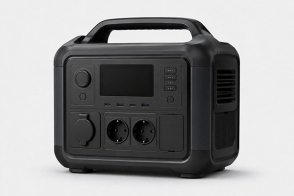
Power stations are a middle ground between a power bank, which has limited capacity, and a bulky, noisy generator. Essentially, a power station is a large power bank that can power several devices at the same time.
Depending on the power output and capacity of a power station, it can be used as an alternative power source for household needs. In the event of a power cut, a power station can power not only a phone and small devices, but also a refrigerator, boiler, router and other equipment. The stable power output makes these stations suitable for sensitive electronics.
For camping and outdoor activities, there are models with a lower capacity. They are considerably lighter but no less functional. They can be used to power several devices at once and can even be charged from a car socket.
There are also so-called "industrial" power stations. These are the bulkiest and heaviest models, but they offer high capacity and power output, a long service life and extended operating time. They are used to power high-power equipment, usually for industrial purposes. There are also power station models that can supply power to electric vehicle chargers.
Based on this, it is safe to say that a power station is suitable for both flats and private homes. It is also suitable for those who value comfort when travelling and enjoying outdoor activities. There are even options for businesses that can prove invaluable when they are needed most.
Let us return to the question, "What is a portable power station?" It is a mobile energy storage device that can be used to power a wide range of equipment. Depending on your needs, you can choose a power station for your home, travel or business.
When choosing a power station, you should start with what you plan to use it for. Modern manufacturers offer ready-made solutions depending on power output and size.
Power stations for camping and outdoor activities are compact and usually fairly light, with some weighing as little as 2 kg. You can always purchase an additional battery for the power station and significantly increase its capacity if necessary. Home power stations are larger, but they are also designed to power more devices. They often have wheels for ease of use. Almost every manufacturer offers power stations with a stylish design. When choosing an industrial power station, the required power output should be your primary consideration.
There is a wide range of power stations on the market. However, there are some clear leaders: EcoFlow, Bluetti, Jackery and Könner & Söhnen. These are global manufacturers that provide warranties for their products, offer technical support and manufacture high-quality equipment.
Advantages and Disadvantages of Power Stations
Advantages of power stations:
- First and foremost, mobility. A power station can be kept at home or taken with you in the car. It is versatile.
- A stable power supply allows sensitive electronics to be connected safely.
- Lower environmental impact. Unlike generators, which produce exhaust fumes, power stations produce no exhaust emissions. Noise levels are also worth mentioning, especially when compared with a generator. Power stations operate quietly and are virtually silent. Compared with a generator, a power station can also be safely used indoors, whether in a residential or industrial setting, and even in a tent or vehicle. There is no need to buy fuel, change the oil or carry out regular maintenance, unlike with a generator.
- Versatility and fast charging. A power station can be charged from a standard wall socket, a car socket or solar panels. Some models can also be charged using a generator.
There are several disadvantages of power stations:
- Limited cycle life. Each power station is designed for a certain number of charging cycles. Depending on the manufacturer, power stations are generally rated for 500-3,000 cycles. The number of cycles depends on the type of battery used in the power station. NMC/Li-ion batteries are usually rated for 500-800 cycles on average. LiFePO4 batteries are the most durable and are typically rated for 2,000-3,000 cycles. In practice, this can equate to more than 10 years of use. It is also important to understand what a cycle is. Essentially, it means using 100% of the battery's capacity. If you use 30% of the battery charge, recharge the power station, then use 70% the next day and recharge it again, this does not mean that you have used two cycles, but only one. One final point worth noting is that the stated number of charging cycles indicates the number of cycles the battery is rated for before its capacity is reduced. After this number of cycles, the battery will typically retain around 80% of its original capacity. You will still be able to continue using the power station.
- The weight of power stations is also considered a disadvantage. As mentioned above, high-capacity power stations are indeed quite heavy and can be bulky. Manufacturers have taken this into account: some power station models come with wheels. This is a practical solution for home use and makes it easy to move the power station around for different purposes.
Now that we understand what a portable power station is, it is safe to say that it can be useful to almost anyone. It is a reliable backup both during a short-term power cut and a complete power outage. Camping and outdoor activities become considerably more comfortable when you can power the equipment you need.
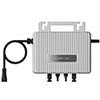
It is also worth looking at a power station with solar panels. This is a setup that allows you to be completely independent of mains electricity when charging the power station.
Manufacturers such as Anker, EcoFlow and Bluetti offer power station models that can be connected to a solar panel, allowing the station to be charged using solar energy.
Of course, there are several disadvantages to this setup. One is its dependence on the weather: such a setup will work well in sunny conditions. Also, if the panel has a low power output, the power station will take a long time to charge. However, in the event of a complete blackout, you can be entirely independent of mains electricity.
A power station is an excellent solution both for backup power and for use as a primary source of electricity. It all depends on your needs. Modern manufacturers offer many options, including additional battery packs and compatibility with solar panels.
Comments : 0